Mockups
I decided to launch the "Tutorials" page with a specific situation in mind. I presented a prototype of my upcoming navy blue derby shoes there, knowing I wanted to experiment with different lasts and patterns. I did, but the result made the situation even more interesting.
During the mock-up phase, I realized how incredibly complex the production process would be with just a few design changes. It's one thing to draw beautiful lines on a last, thinking that such shoes would look great on the street. Sketching a design with the "how" in mind is a completely different approach. I think I'll have to master this mindset.
My recent reflections on the beauty of lines and simplicity are another impetus here. My design imagination is quite vivid, but it also reflects my inexperience. Often, while assembling an upper, I realize how difficult it will be to sew it on a sewing machine. In the future, I need to put more emphasis on the technical side of my designs. I'll simplify it. But I'll also make it more durable. It seems I'm ready for the next step towards a mature design process.
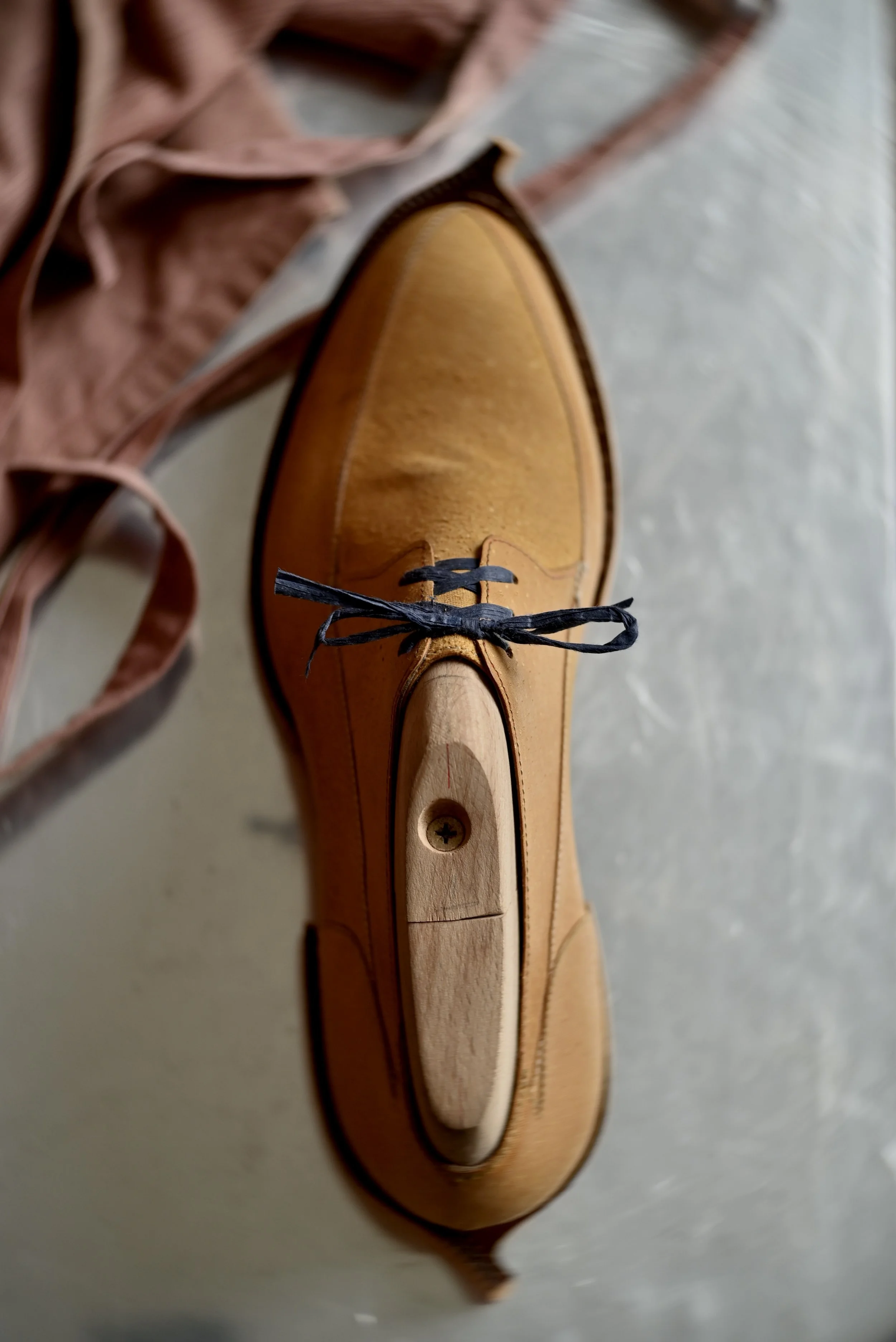
Sometimes my mock-up uppers are used as test models for experimental sole designs. I often find these lines so intriguing that I want to explore them further.
I'm fully aware of the ugliness of my design madness. These experiments serve to improve my craftsmanship. Your city streets will not suffer because of this. Your eyes won't bleed.
Sometimes I create things to better understand their functional limitations. Other times, I'm so absorbed in the design that I want to see them sitting on my workbench as an inspiring object of admiration.
The truth is, however, that there's absolutely no reason to reinvent the wheel. Any experiment leads to the conclusion that functionality determines shoe design.
There aren't many things you can add as a whimsical addition without sacrificing functionality. That's why classic design seems so inevitable to us. But knowing this, boldly asking questions is so exciting! Just the thought of it makes my heart beat faster.
So why isn't a mock-up a prototype? To produce an upper, you first need to create your lines on the last. Then, copy those lines from the 3D world and transfer them to the flat surface of paper patterns. Armed with a mock-up of the upper, you use it to check if the transfer process was a success. A mock-up is always made of lower-quality leather and lacks any stiffeners, other real construction features.
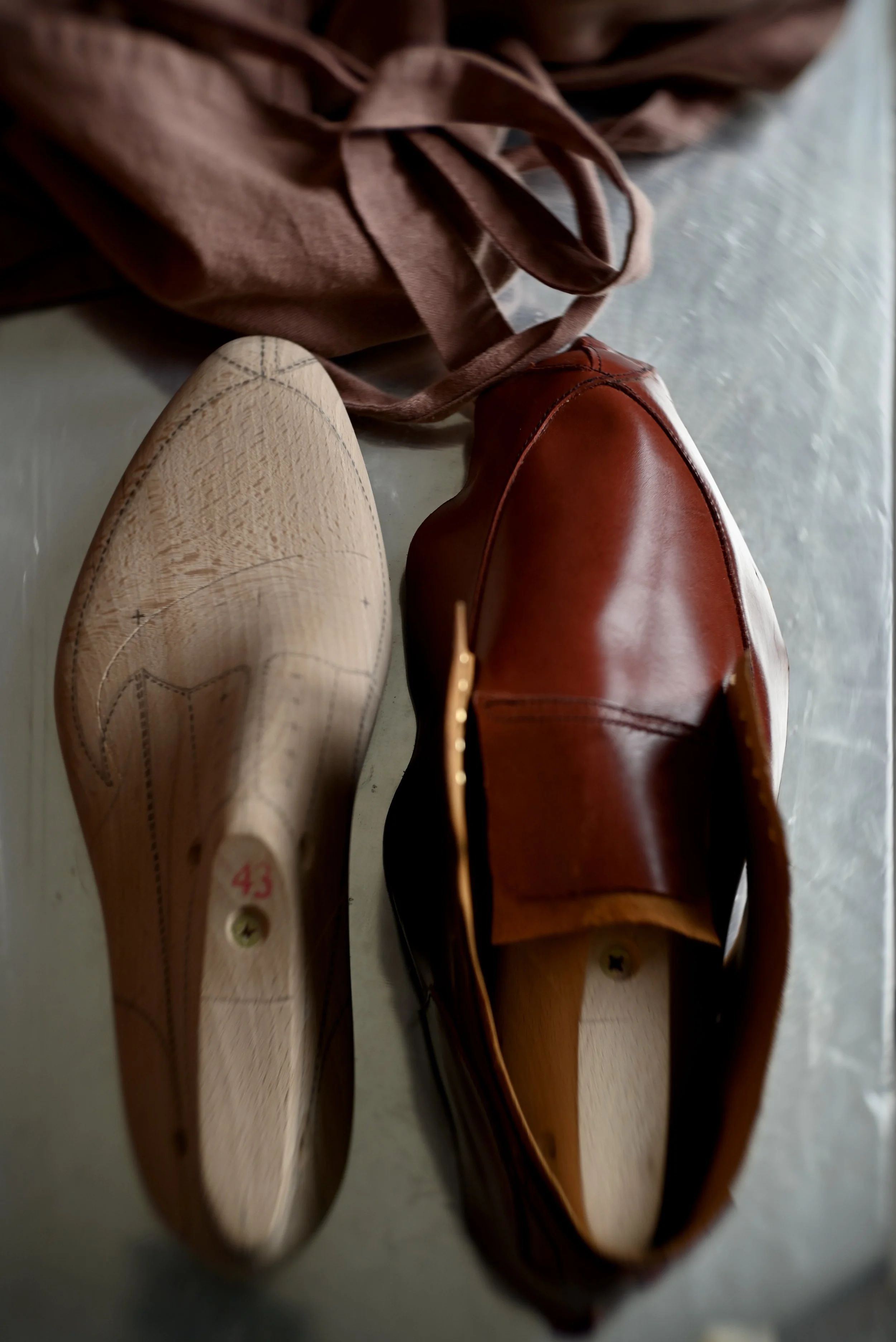
This happens from time to time. What was intended to be a mockup becomes a full-fledged prototype to test the fit at an early stage of production process.
On the other hand, a prototype upper is a fully functional product. Basically, it's an uglier copy of the final upper. It's still okay to make mistakes here, unglue, re-sew, etc. This is very useful if you want to double-check the whole process before starting production.
At this stage of production, I want to practice all the steps, take notes, see how it looks, and make sure there are no unexpected issues.
This is because my designs are original, and there's no book that can teach me how to make them.
Creating patterns is quite a difficult task. I've often heard from my colleagues that I do them perfectly. Indeed, I devote a great deal of time and attention to this stage.
When it comes to making uppers, I still need a lot of theory and practice. This is probably why I rate making them so high on my list of difficult stages of production. Generally, a well-made upper is something that impresses me immensely in the work of other shoemakers.