Lasted Shoe Trees
I love what I do…
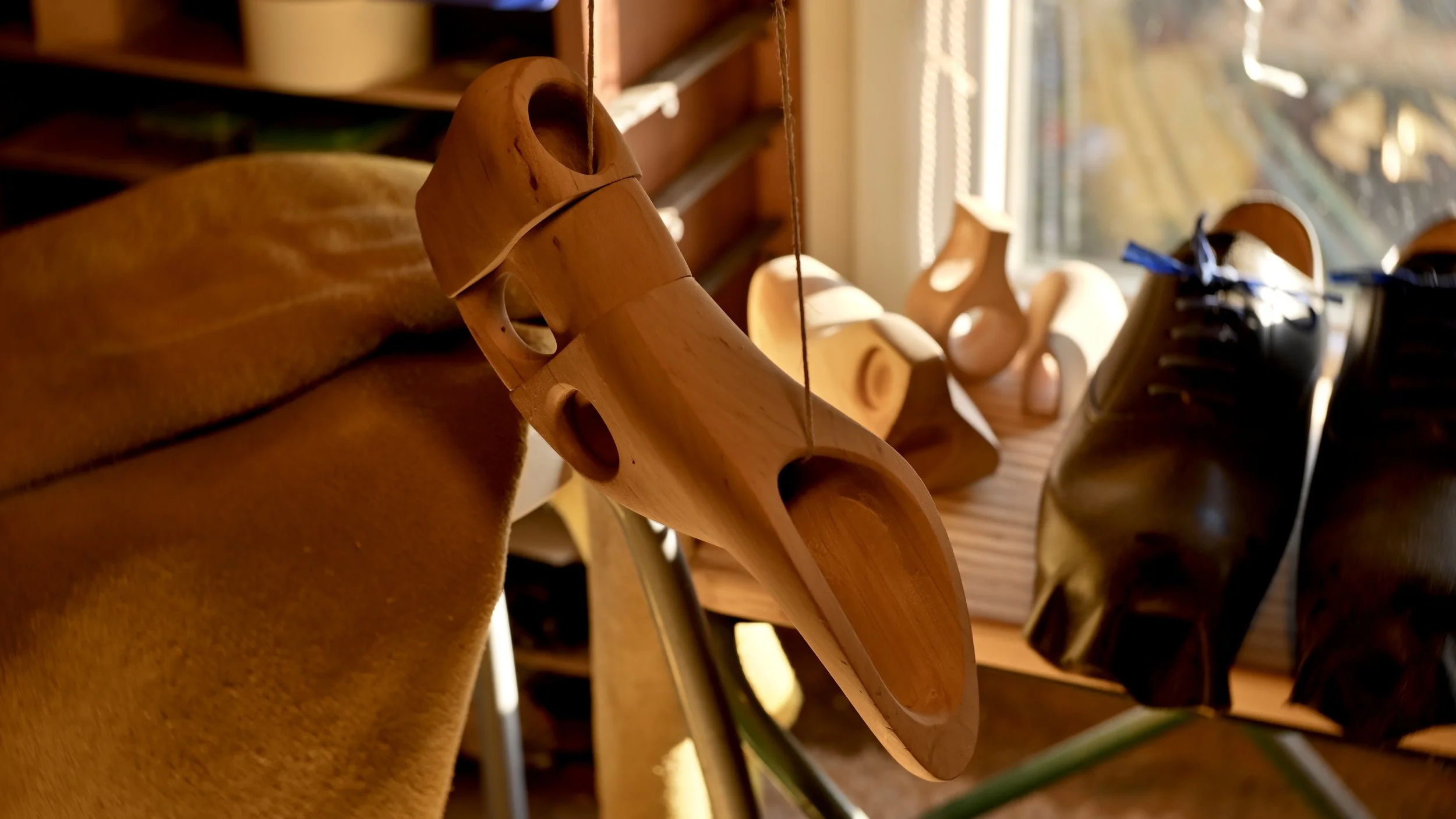
The photos show prototype shoe trees I made five years ago for my second pair of shoes. I've featured that second pair in previous posts already. I crafted each shoe tree element from separate blocks of raw alder wood. This wood imparts a pleasant aroma to the shoes while also being lightweight, easy to work with, and reasonably durable. My carpentry experience certainly came in handy. I even posted a photo of the production of one of these blocks in my Gallery.
Shoe trees are an indispensable companion to a pair of shoes. There are several types, and my absolute favorite is the three-piece shoe tree. As an original maker, I had to develop my own design. That's why I created this prototype. I primarily wanted to explore the limits of how far I could go in removing unnecessary excess material and to conduct an experiment by embedding all the handles directly into the wooden elements.
This clean form, free of fittings or strings, is my answer to the question of what kind of shoe tree is best for my pairs of shoes. Each pair of shoes is unique, though, so I develop shoe tree designs that meet specific requirements. In this case, for example, I was able to use handles hollowed out in the front piece because the lacing is wide enough to allow the wearer to reach deep to pull the shoe tree out of the shoe. In the case of a shoe bottleneck, a different approach is necessary. Therefore, my shoe trees are not made from a single template. They are as unique as my pairs of shoes, or the bags and boxes in which I package them.
Hollow, lightweight, efficient…
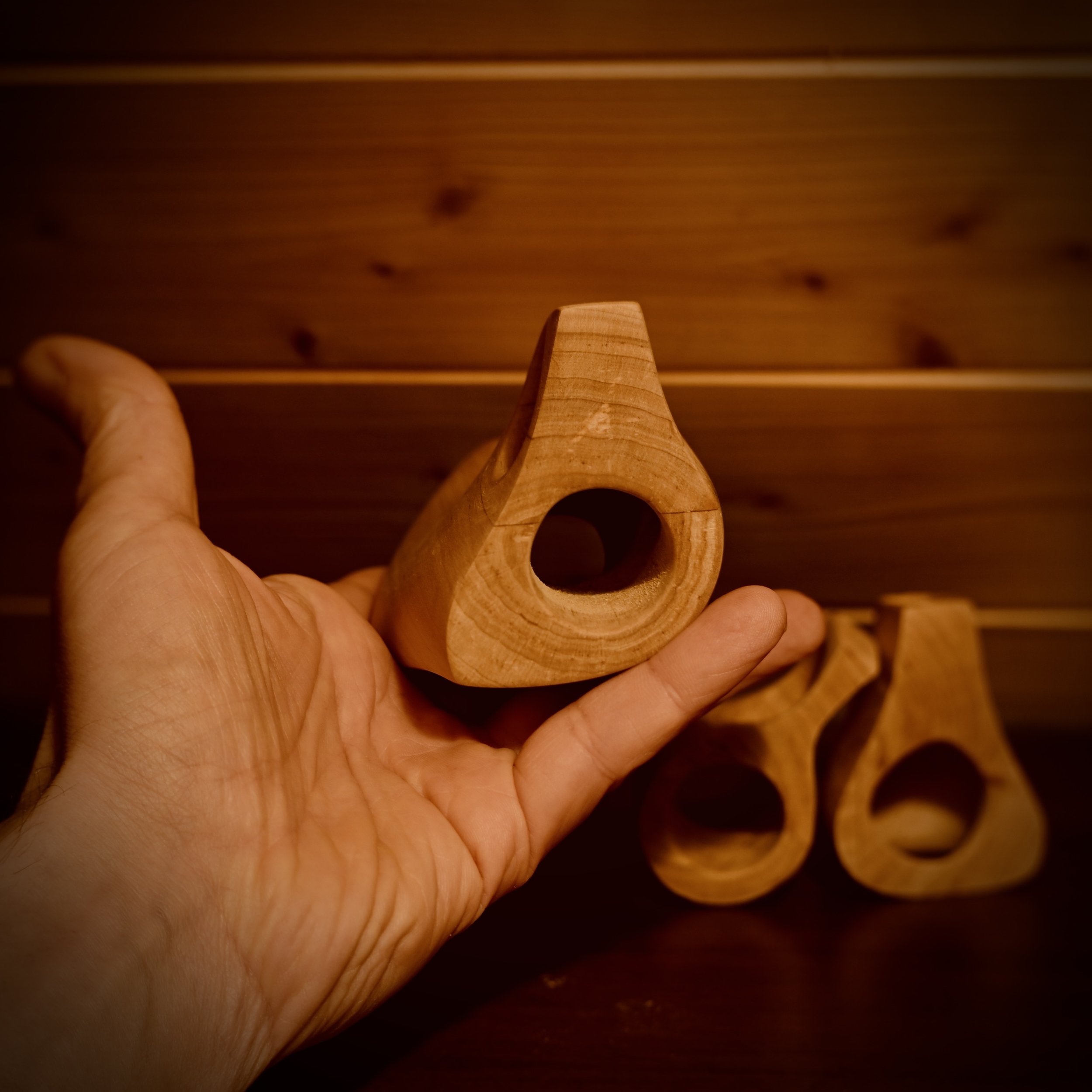
The idea is simple: minimize weight, maximize airflow within the shoe, and guarantee exceptional aesthetics and originality.
The heel block is almost completely hollow. I call the channel that flows through it a "chimney." By precisely carving a wide channel along the entire length of the shoe tree, any moisture is channeled out through the chimney, allowing the leather to dry freely after being put away in the closet.
Here, it's worth addressing a certain online debate about when to insert a shoe tree. Some say it's best to do it immediately after taking your shoes off. Others say it's best to let the leather air dry and then put in the shoe trees before the pair will end up in the closet for a while. Both approaches make sense, but they depend on the specific case. Hence the aforementioned debate, as each side has its own justifications.
If the shoe trees are made of three solid pieces of wood, which are shaped according to a last, tightly filling the shoe, it's a good idea to wait a moment and allow the leather to dry. In other cases, insert the shoe trees immediately after taking the shoes off.
Wood is naturally hygroscopic, meaning it naturally absorbs moisture. Therefore, shoe trees should be made of untreated, raw, unvarnished wood. When placed in damp shoes, it naturally absorbs sweat. Secondly, leather is most pliable and flexible when moist and warm. By inserting shoe trees, we smooth out natural wrinkles and reverse the deformations of the original shoe shape. Because it is not just about the upper, but it also applies to the construction of the shoe itself and its sole.
Of course, shoe trees made according to the last shape are unrivaled, and for this reason, custom-made shoes prove their superiority over their off-the-shelf counterparts.
It's extremely rare for me to hear my colleagues express sufficient appreciation for this essential element of good-quality footwear. That's why I decided to dedicate a separate post to this topic.
When I first started falling in love with footwear, I was merely an enthusiast, loving to spend hours staring at shoes, cleaning, polishing, and so on. Back then, I couldn't even dream of bespoke shoe trees, but I bought every new pair from the start with the best-fitting shoe trees possible. I intuitively felt that a purchase without shoe trees was somehow incomplete. Even for shoe care alone, well-fitting shoe trees seem obvious to me to this day.
Shoe trees serve an extremely important function for hygiene reasons and the aforementioned mechanics of a product made from a natural material like leather. But they can also serve as another aesthetic element, complementing the joy of owning a unique, luxurious product, crafted by someone who conceived and created a work of solid footwear from start to finish with complete care and love.
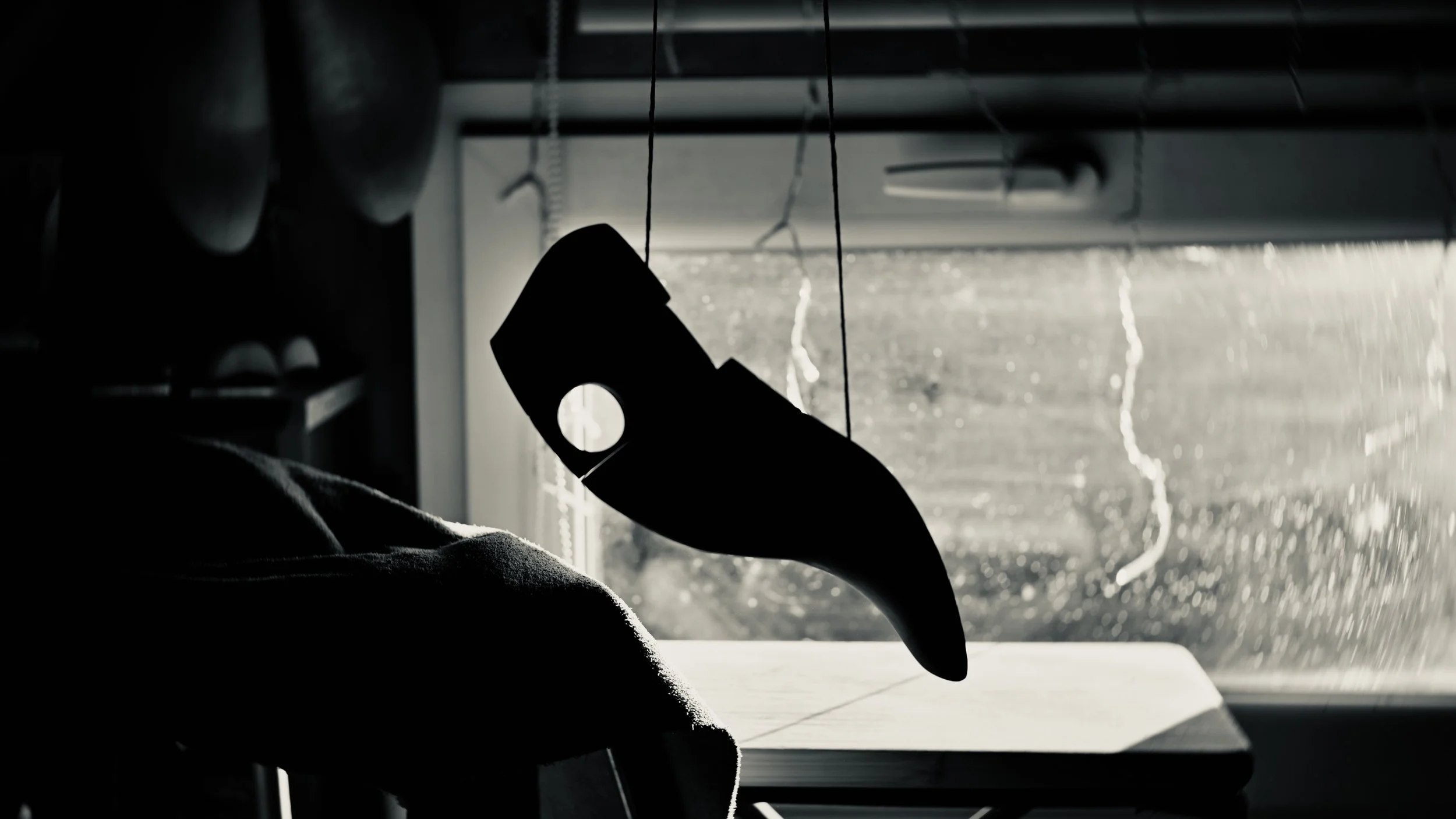
The silhouette of the shoe trees directly corresponds to the top line of the upper. Conceptually, I want to avoid situations where the shoe trees protrude above this line. In any shoe style.