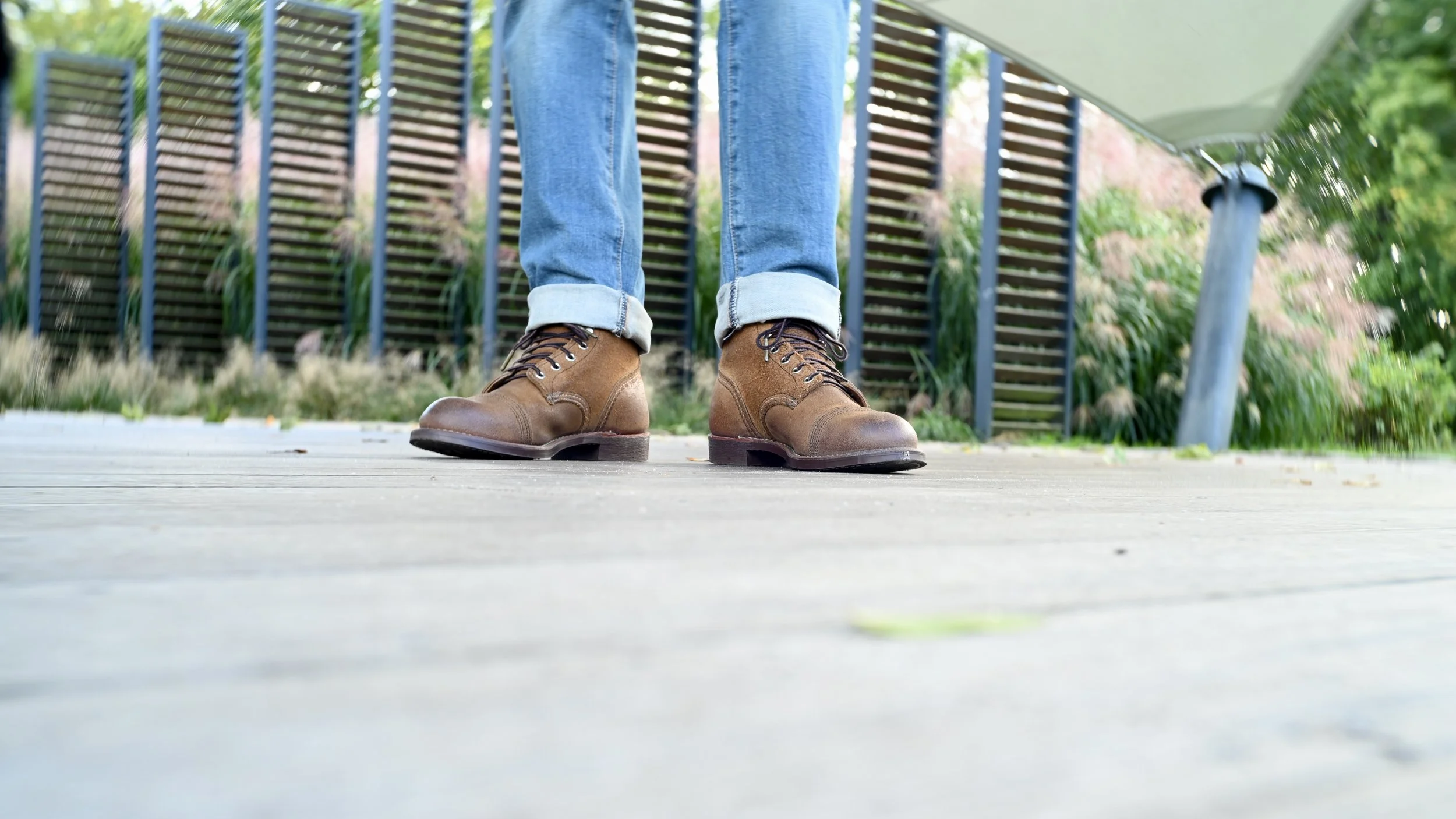
There’s a soft spot in my heart for work boots…
What happens when a Japanese designer reimagines traditional work boots originally built for heavy-duty iron ore mining? You get the Red Wing’s Iron Ranger. Even back when my interest in footwear was just beginning to intensify, I found myself drawn to this style. Solid construction, casual flair, and quality materials—that is the essence of what this Minnesota-based company offers.
My specific pair is the 8083 model, featuring the distinctive, durable, unlined Hawthorne Muleskinner leather finish. Getting used to work boots takes time. The Goodyear welt construction is also somewhat stiff at first; this type of footwear requires a break-in period.
This brings us to the "elephant in the room": sizing.
An issue that doesn't exists with pairs from me, for obvious reasons, but buying off-the-shelf shoes can actually become a chaotic mess. We all know that a nominal size can vary significantly from one manufacturer to another.
The Iron Ranger model is built on the "No. 8" last. If you wear Converse sneakers in European size 43 or 44 feels like slightly too loose, the Iron Ranger in US size 8½ or 9 will be a comfortable fit for you. As a rule of thumb, it is better to choose larger size. Foot size changes over time, a factor worth considering when purchasing long-lasting footwear.
These are absolutely fantastic boots, comfortable enough for everyday wear. The finish I chose develops a beautiful patina over time. The only thing I would change is the fact that the forefoot area has a cotton half-lining; however, given how often I rotate my shoes, it isn't a major issue.
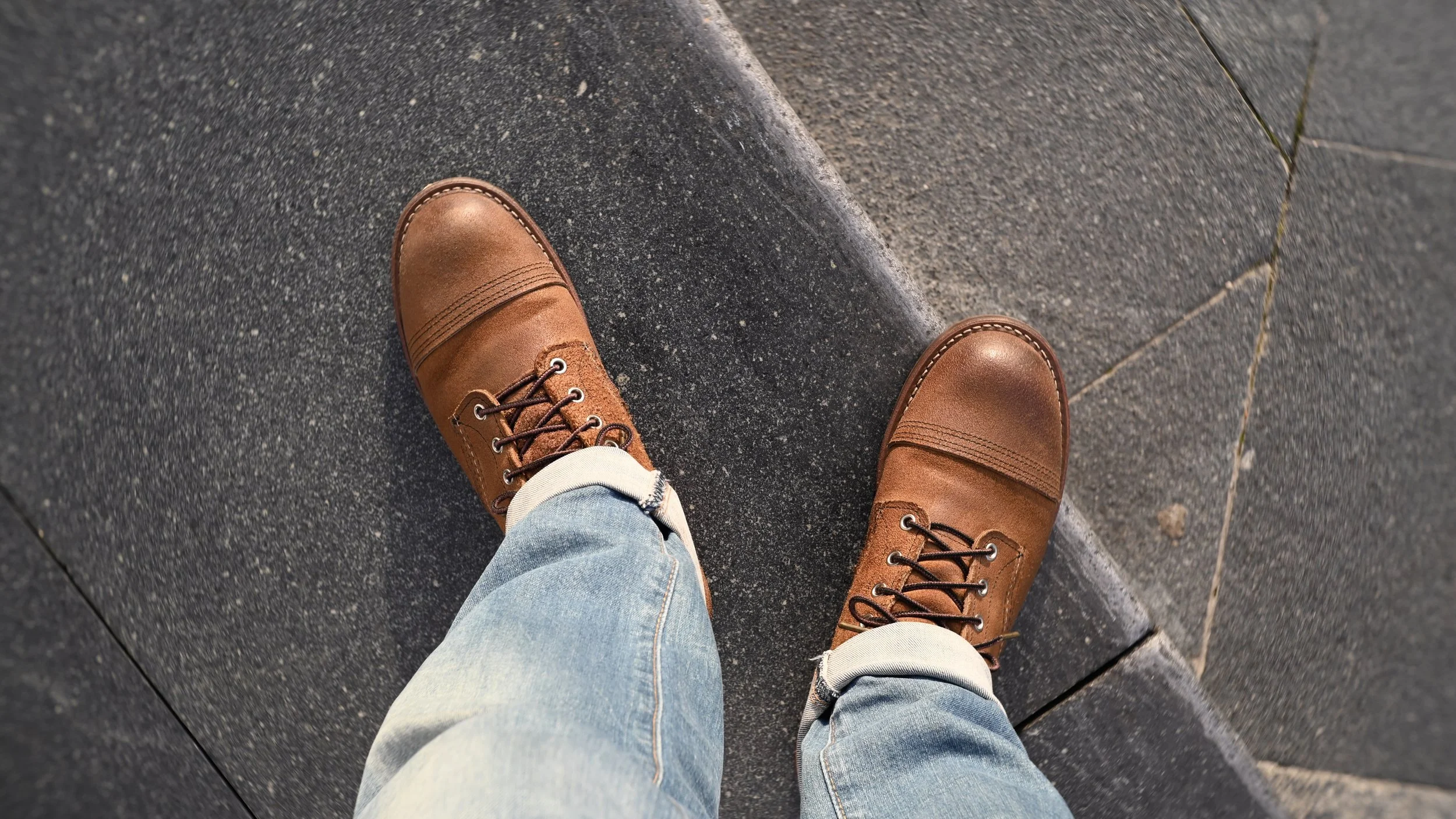
What I like about these types of boots is knowing that I can do anything in them in any weather.
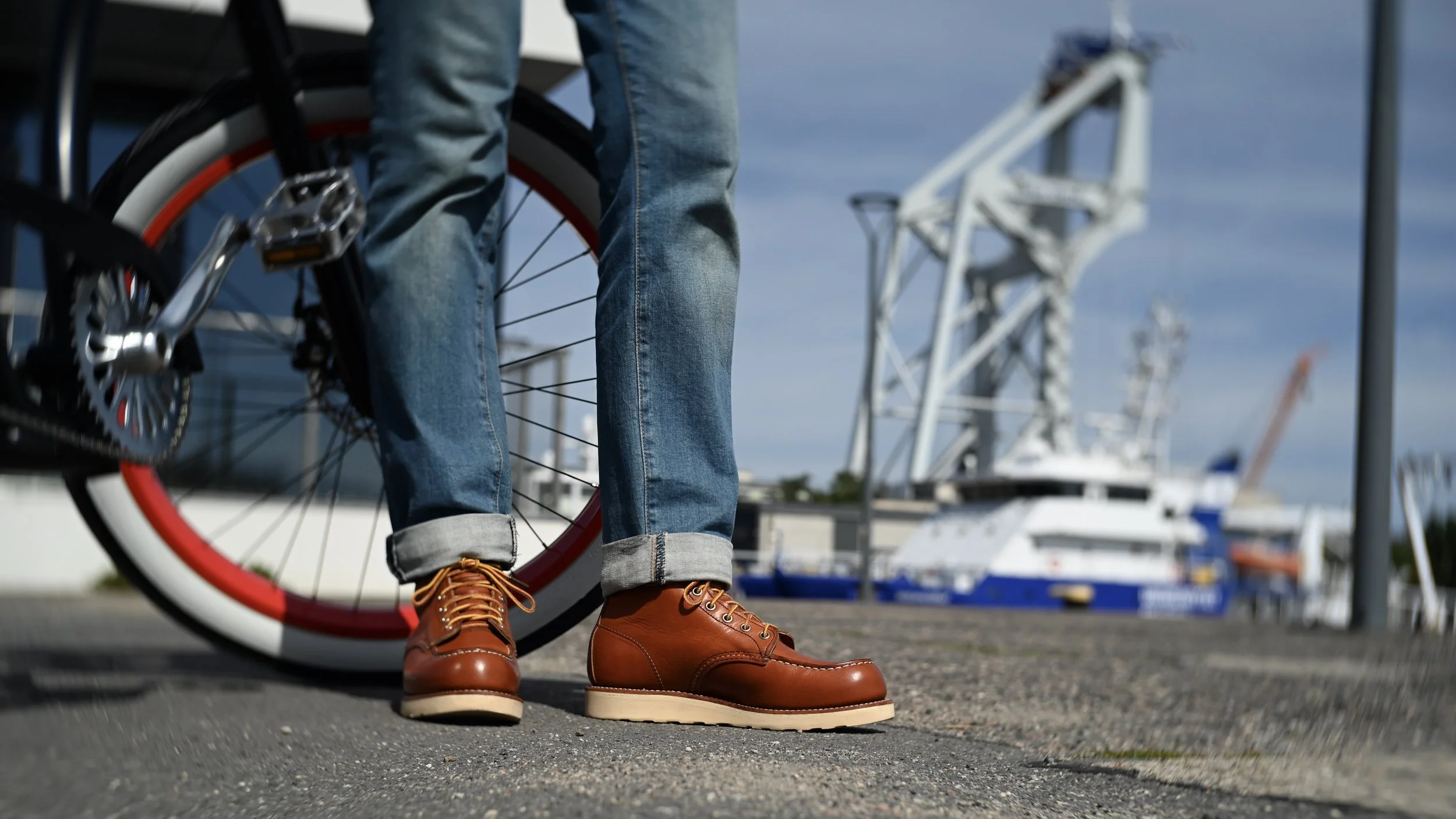
And speaking of classic work boots - Red Wing Moc Toe, model 875. Looking through my works, it is clearly visible that I have a weakness for apron design. Among the Red Wing models, it is difficult to imagine something as iconic. Generally speaking, when thinking about this American manufacturer, the average footwear fan thinks of either Moc Toe or Iron Ranger right away.
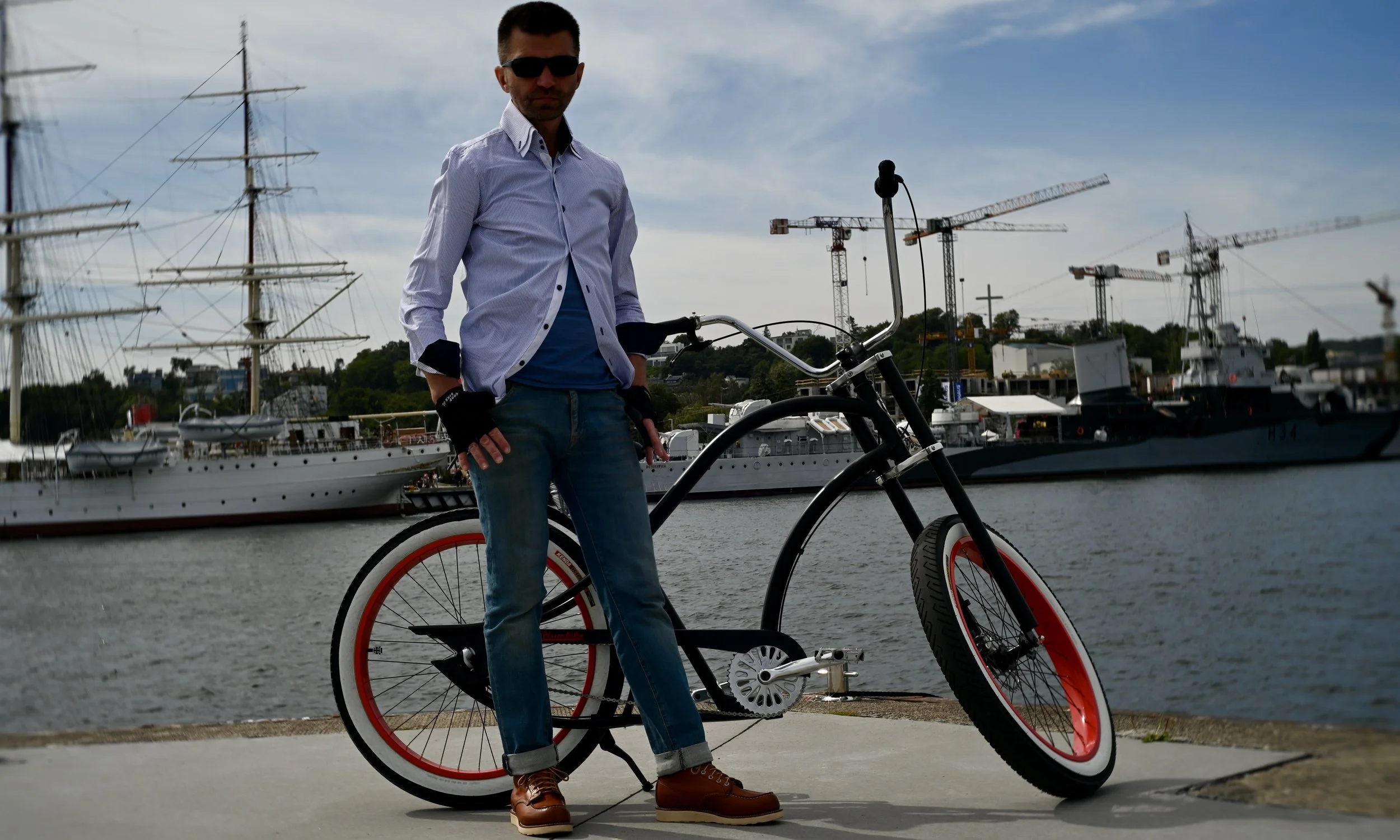
When I have no idea whether I want to take a walk or ride a bike...
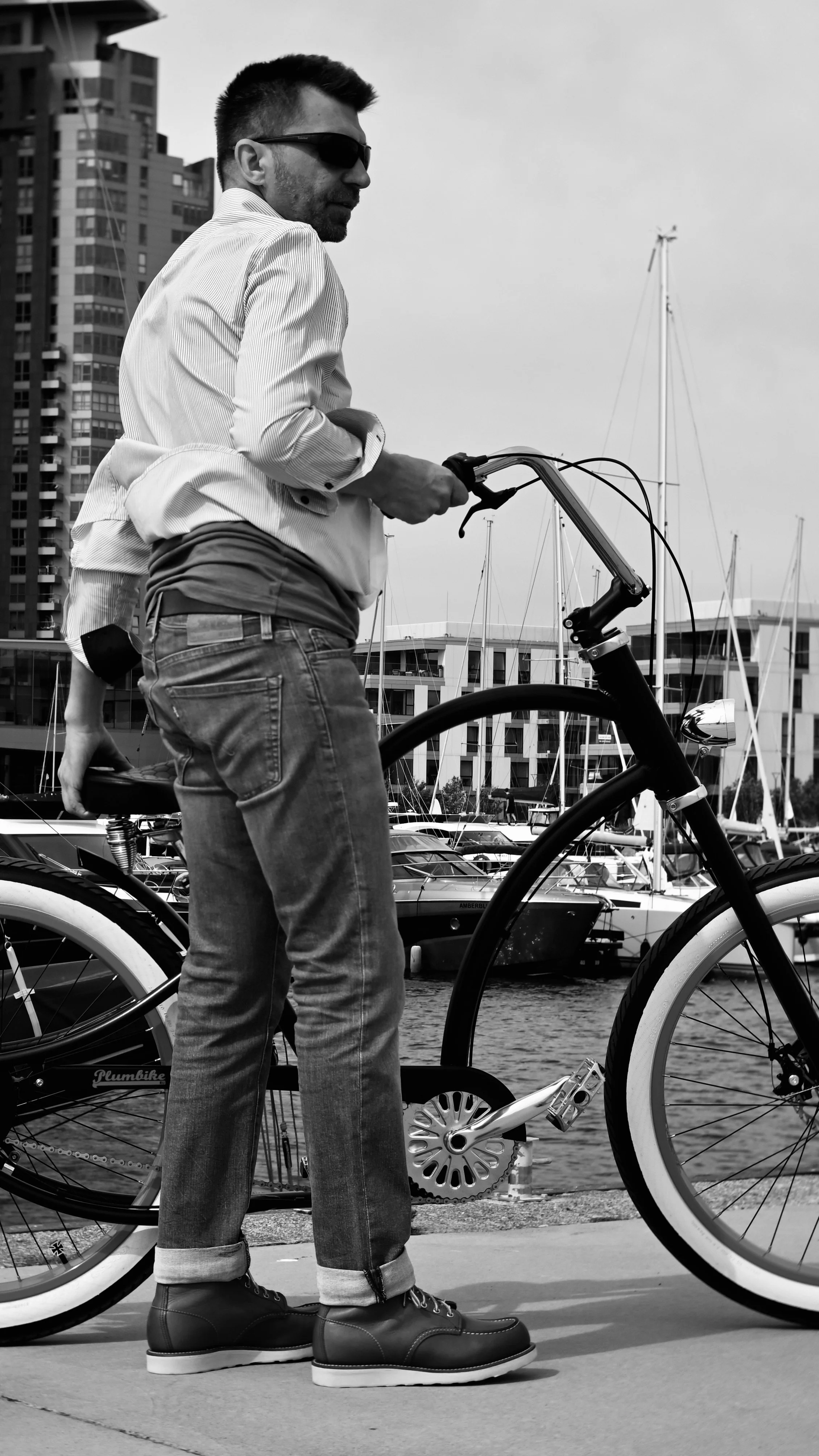
The most comfortable pair of boots I own.
As I’ve mentioned before, cycling is one of my favorite pastimes. Clad in my 875s, I look hipster-as-hell riding my custom-built chopper through the town's streets.
The Moc Toe is built on the No. 23 last. My sizing recommendation is to go half a size up compared to the No. 8 last. The sole on this model offers exceptional feet support; I remember feeling like I was walking on a cloud during my first walk in them. They are incredibly comfortable boots—personally, I find them more comfortable than the previous Red Wing classic.
The Oro Legacy leather finish is one of my favorites across all my pairs. In fact, leather quality is one of the company's most distinctive features; S.B. Foot Tanning Company does a truly outstanding job here.
Like my Iron Rangers, they will develop a beautiful patina over time—though, despite having owned both pairs for ten years, they still look too good! I rotate my footwear too frequently to expect a truly personalized look for this pair just yet.
Many people hold the view that brand new work boots are ugly boots.
Nothing like a midday in Gdynia!
The Heavy Duty (HD) footwear chain store, the early 2000s, a chance visit, and a purchase made within minutes of scanning the shelves—that is how the story of this pair begins. It is the longest-running story of them all. It was a spontaneous buy. Only years later was I able to appreciate what I had actually stumbled upon.

I wouldn't say it's my current style, but these shoes inspire me to go a bit corny.
In my teenage years, I wore combat boots. If you are familiar with Alice in Chains music videos from the nineties—and specifically if you recall how Mike Starr dressed during the Dirt album era—then you can picture me in my youth.
I was a bassist, too; I played in bands and loved that lifestyle just as much. In fact, from a very young age, I was convinced that music was my path to happiness. And I must honestly admit that I consider the fact that my fate has taken a completely different direction to be my biggest failure when it comes to choosing what I want to do in life for money.
But setting that aside, the real point here is the context surrounding the decision to buy this particular pair. I had never owned anything like them before.
Although combat boots had been my footwear of choice for some time, these spectator shoes proved to be a massive challenge to break in. At first, they were so stiff and hard—causing so many blisters and sores on my feet—that they ended up sitting in the back of my closet for years.
I became thoroughly put off by this type of footwear, marking the end of that style in my life in this way.
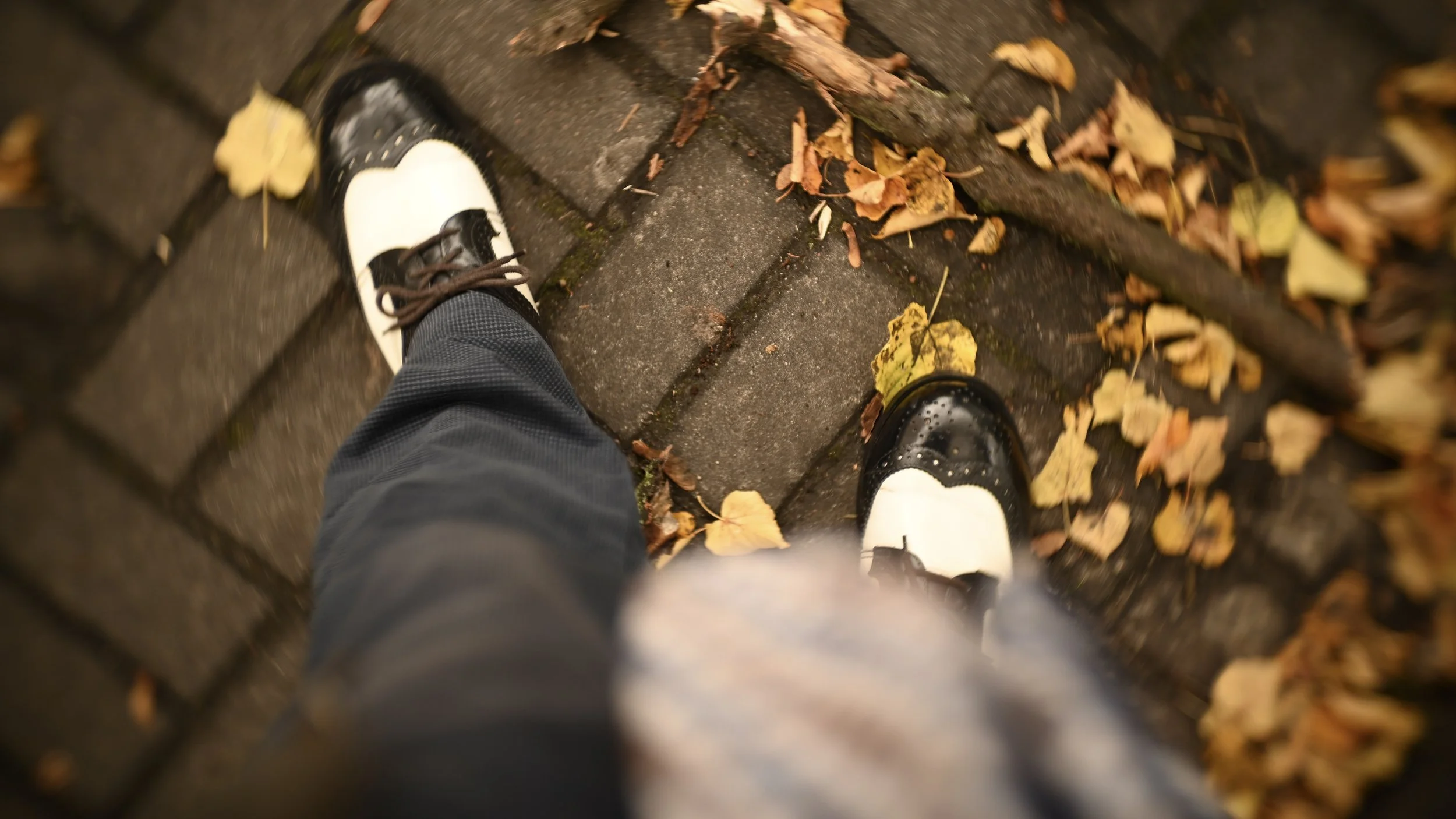
These are still unique in my shoe collection.
Years later, I picked them up again, surprised to find I even had such a pair in my collection. My accumulated knowledge and experience allowed me to review these shoes from a completely different perspective.
Let’s begin by examining the style itself. In the immediate aftermath of the Second World War, a particular type of footwear gained popularity in England—one intended to ostentatiously celebrate the Allied victory. Following years of hardship, austerity, and sacrifice, it was finally time to breathe freely once again.
As raw materials became increasingly available, the footwear industry began to introduce new designs. Men started opting for more eye-catching shoes, with double-soled models becoming particularly fashionable. Their substantial, heavy build symbolized the end of the lean years, as an industry finally unshackled from wartime restrictions unleashed these "fat cats" onto the market. This gave rise to a style the Americans later dubbed Gunboat.
This pair draws directly from that tradition. Furthermore, the upper features a "longwing" design—with the toe cap extending all the way to the back of the shoe—a detail also borrowed from American footwear design.
While technically a derby, the shoe’s appearance at first glance leans closer to the Blucher style. This effect is achieved through the upper’s most distinctive feature: the two-tone spectator look, so evocative of the streets of Chicago in the 1930s.
But that’s not all! What truly sets this pair apart is its construction. The first layer of the sole is attached using the Blake stitching method, while the second, outer layer is secured with a double row of brass nails all around. Taking all of this into account, you can surely see what an important place such a pair must occupy in this brief list.
I bought them on sale and am convinced they were part of a limited run; I simply cannot imagine that shoes crafted with such quality and originality could have been mass-produced. From a purely technical standpoint, they are a true treasure. I am proud to own them.
The traumatic memories of my many failed attempts to break them in have faded enough not to color my current feelings toward this exceptional pair. Besides, I eventually overcame those initial hurdles well enough that, over the years, they’ve danced the night away with me more than once and accompanied me on countless walks.
They are a bit too short for me now, but that detail aside, they are incredibly comfortable. They also creak slightly when I walk—a sound that is music to my ears. They are the only pair of shoes I own that resonate with my stride in this way. Sometimes I feel like making a pair that is intentionally designed to squeak while walking. In this case, however, the sound is authentic and natural, and I find it thoroughly enjoyable.
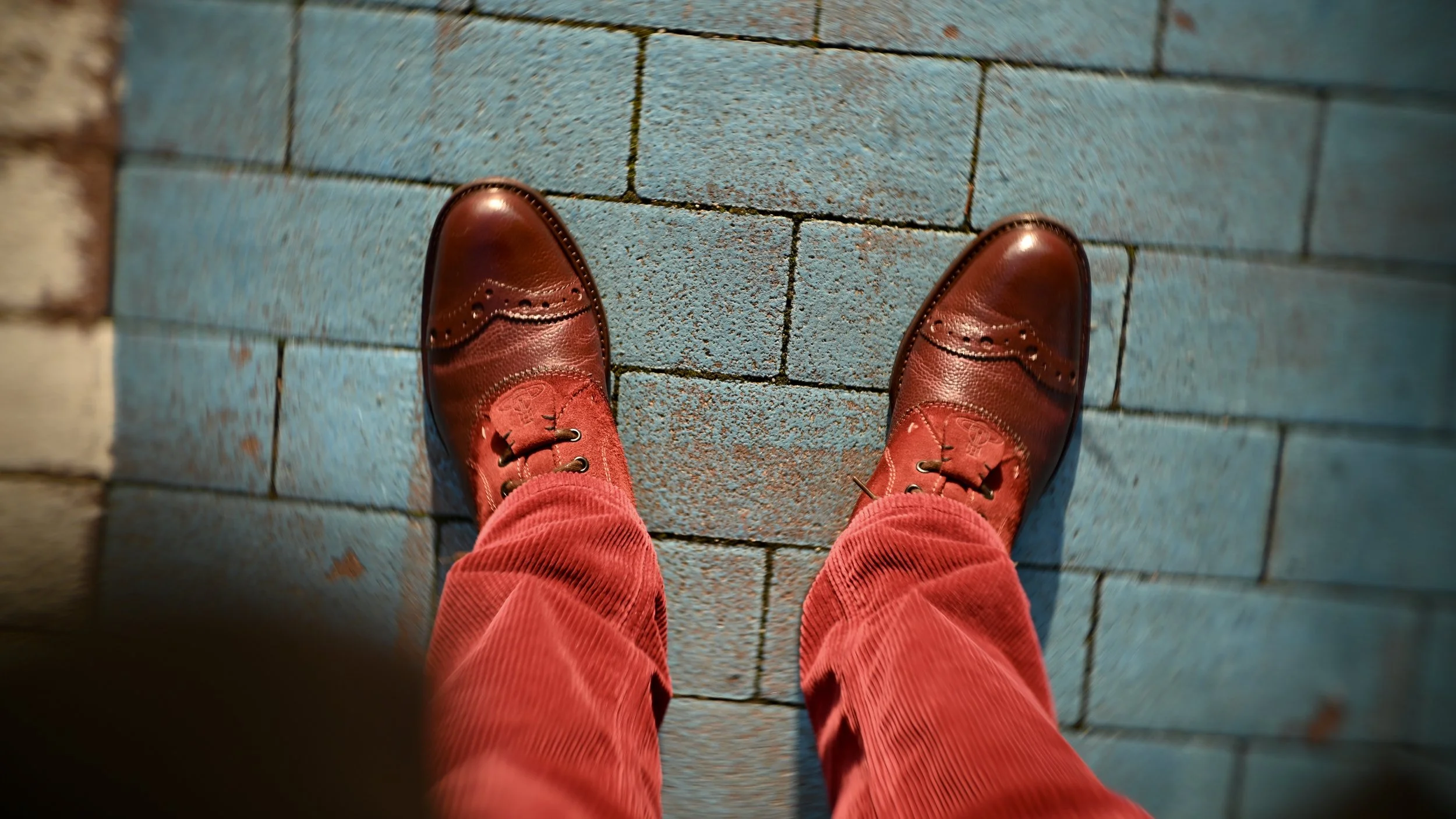
Quite bold lines and styling. Certainly not for everyone.
There was once a band called the Sex Pistols, a fixture of London clubs, stomping their shoes across the capital’s pavements. Their path occasionally led to the Sex boutique, where Malcolm McLaren would sync his vision with fashion designer Vivienne Westwood.
These striking boots are the result of a collaboration between the shoe factory Barker and the eccentric Westwood. They offer a bold take on the classic Balmoral style. I bought the trousers a bit later, specifically with this pair of boots in mind—a truly perfect combination!
Visually, they act as a magnet for the gazes of passersby. Their daring burgundy hue shimmers magnificently in the sunlight, occasionally eliciting comments or smiles. These are boots made for showing off, strutting with confidence, and breaking the ice.
I bought them quite a few years ago. In fact, the very moment I first laid my eyes on them, I knew I had to have them. It was mainly because of their appearance—strikingly reminiscent of spats worn over low-cut shoes—something I have a particular weakness for.
All the more so because, on the street, one usually encounters spats only in their vulgarized form these days: worn by young emo girls or as part of the neo-punk looks adopted by today’s teenagers—girls so desperate to stand out from the crowd that, in the end, they all look just like one another in their contrived uniqueness.
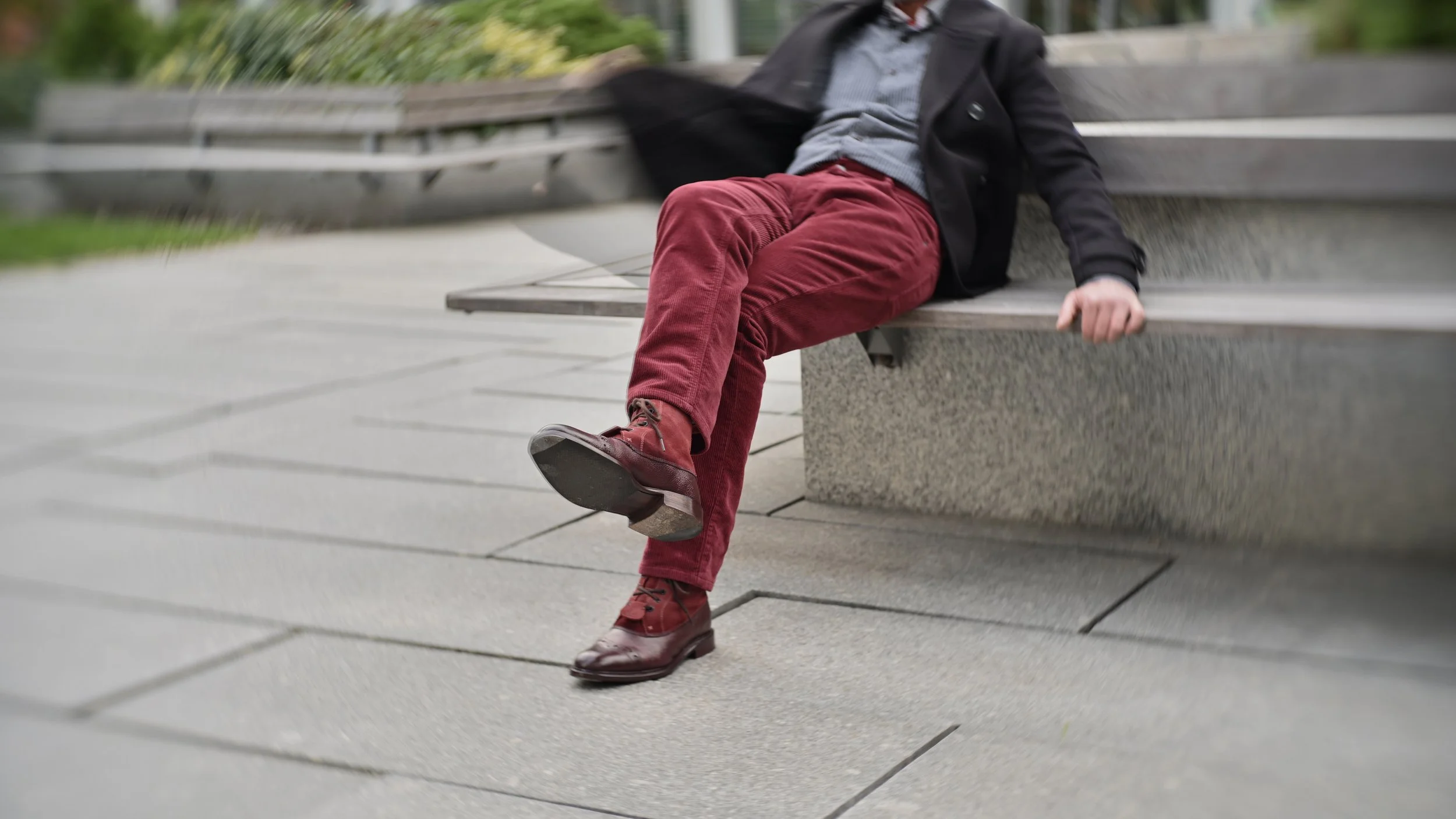
It’s boldness in a nutshell!
Right after buying them, I wasn't convinced about the fit; they seemed too loose. But looking back now, they’ve become some of the most comfortable boots in my collection. It was an important lesson for me: a proper shoe fit isn't about a "vise-like" grip. The foot needs a bit of freedom inside the shoe. One of the secrets to produce a good shoe last lies in the heel area.
That said, there are grounds to criticize this particular pair. Whoever was responsible for the machine-lasting of the uppers must have been half-asleep on the job that day. The sole stitching isn't precise—some of the threads missed their mark—and the stiffeners leave a lot to be desired.
Overall, the workmanship simply isn't up to par. Even taking into account mass production and the very reasonable price point, it’s a shame that Barker sets the bar so low when it comes to quality check. It’s a pity to see such an interesting shoe concept let down this way.
It was on this pair that I learned how to wax, polish, and do those kinds of things—which is obvious at a glance. Everyone has to start somewhere!
I took all the photos myself, either handheld or using a tripod—as is usually the case. Naturally, this is just a selection from what is—perhaps surprisingly—a rather modest collection.
I would like to conclude this post with the two pairs that truly marked the beginning of my passion for shoemaking; it was the purchase of these two pairs that sparked an organic desire to delve into the subject of shoe production itself.
I bought them a little over ten years ago, persuaded by the delightful staff. I had originally visited the shop—which specialized in machine-welted classic footwear—intending to buy a pair of Loake shoes I had read about.
Instead, I was encouraged to try on pairs from Carlos Santos, and the staff spoke knowledgeably about the leathers and so on. In short, I left the store with two pairs of oxfords that differed only in their finish. As it happens, I went back there more often later on, and the boots shown above were also purchased at the same place.
Anyway, I have worn only one of those oxford pairs, while the other remains in its box to this day, in pristine condition. The fit isn't great. Back then, I looked for shoes that hugged the foot tightly, assuming the leather would stretch out over time—a mistake I’ve already touched upon.
Nowadays, if I want to wear them out, I have to apply plasters beforehand to the spots I know will cause trouble after just a few minutes. I know those spots by heart, so it’s not a major issue. Nevertheless, achieving a combination of elegance and genuine comfort only happened once I started making my own shoes.
To tell you the truth, whenever the weather is right, I usually wear Converse sneakers. From what I already know, I don't differ much from other shoemakers in this matter. Most often, I have to do something quickly and get back to work, and this is not conducive to getting dressed.
Thanks to this, whenever the right occasion arises, I feel even more special wearing something more sophisticated. I am simply afraid of a situation in which I will lose myself in luxury surrounded by elegant shoes. Even though I stare at classic shoes every day, wearing them is still a ritual. I want to maintain this as long as possible.

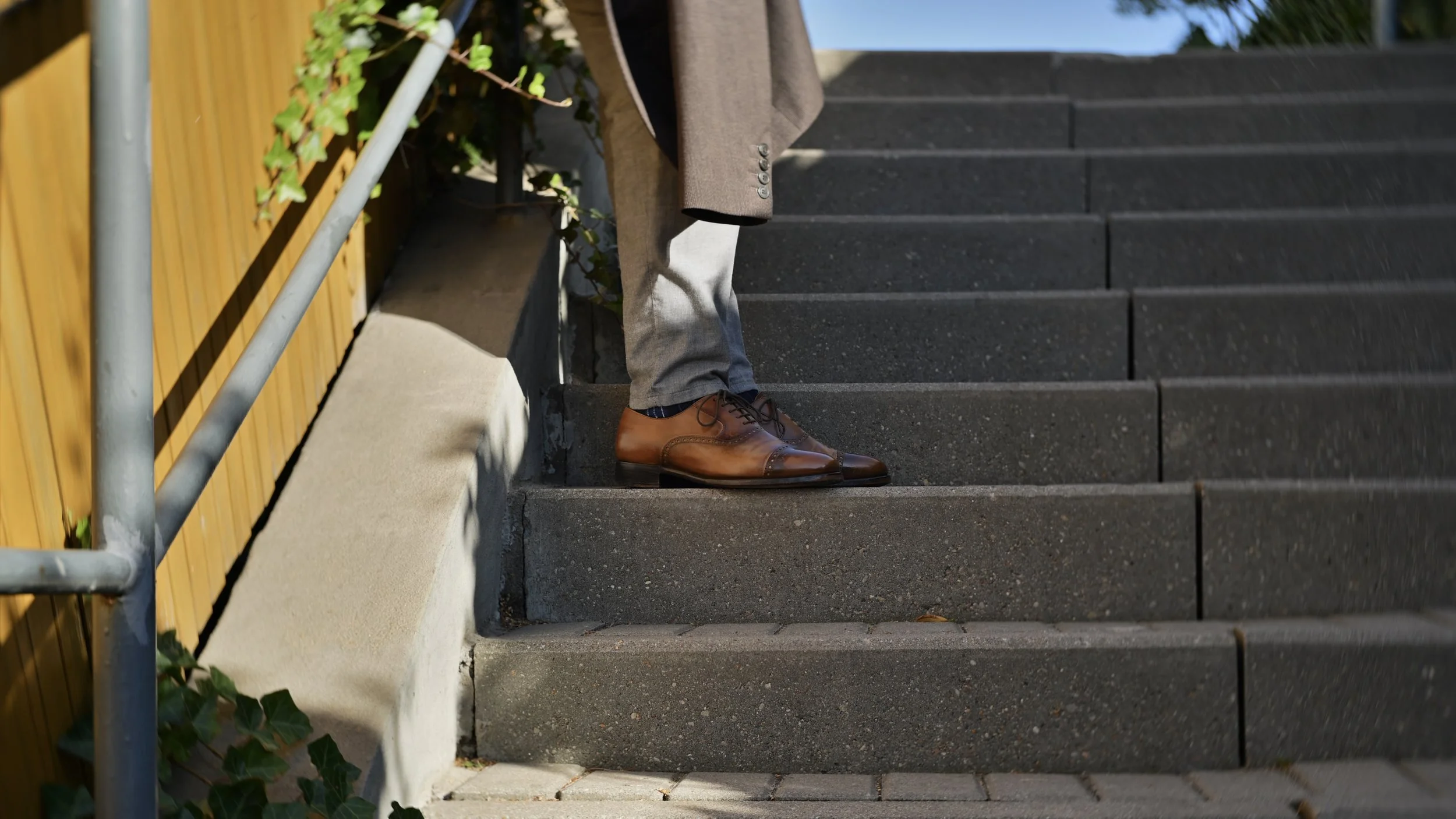
In hindsight, I would have been better off buying this pair a size larger. You only have to look at the lacing.