My Own Design Language
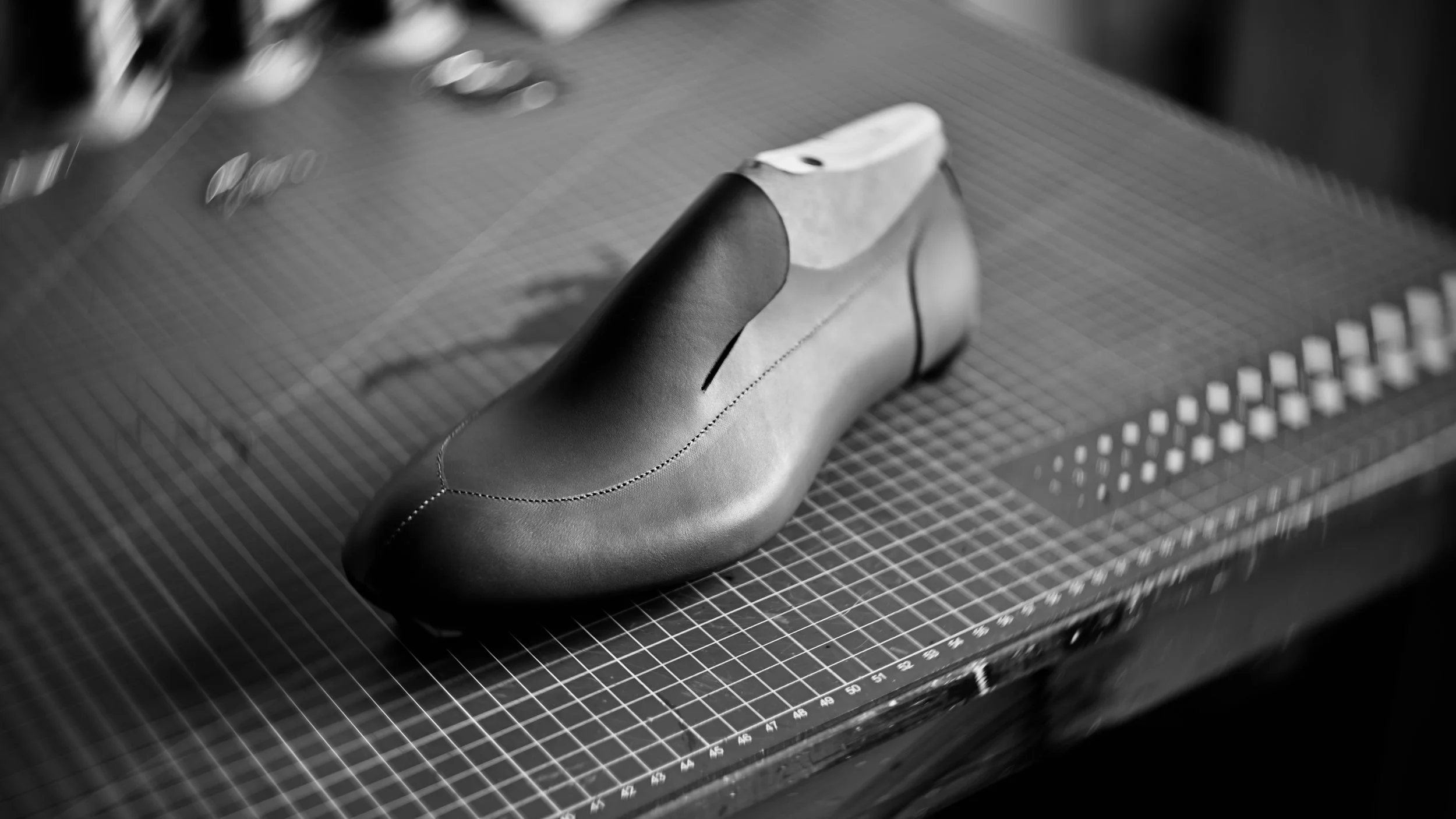
I call this method "shell." It fits perfectly because it's essentially a wholecut style upper cut into pieces.
I'm passionate about analyzing human reactions and collective conditioning. My start in life was difficult and forever marked a hard line between how I perceive reality among other people. In fact, from a young age, I was stripped of all illusions about humanity. For a long time, I couldn't break free from the shackles of trying to fit in. I knew I was different, but stubbornly tried to hide it, clumsily imitating socially accepted norms.
With this in mind, I continue to be amazed by the attitudes of my compatriots towards work. I met with people from my field, wanting to gauge their perspectives on the most basic matters. Almost every time, I was embarrassed to discover the complete mental gulf between us. While declaring that work is a matter that constitutes a person's status, I was disappointed to discover that this concept is intellectually foreign to Poles.
I believe this is one of the reasons Poland is such a flawed country. I see evidence of this literally every day. In both small and big ways. I dare to say that the approach to work defines the efficiency of the entire state organization.
But this doesn't mean my country is an exception. The condition of humanity, and Western culture in particular, is currently in a state of complete decline. In this context, the concept of work is also undergoing a fundamental devaluation. We live in an age of agile search for one's own place. On the one hand, this situation offers a wealth of opportunities for individuals, but at the same time, it uproots them from the traditions of their profession. The result is that we will increasingly encounter people who possess only a cursory knowledge of the work they perform. Thus, we stand on the threshold of an era of universal amateurism.
It's possible that this is a manifestation of deeper changes in humanity's collective self, which, in the mirror of modern IT technology, reflects the image of a complete moron. I observe with dismay the growing inability of physically mature individuals to behave like adults. A phenomenon called "general childishness" by left-wing circles is becoming widespread.
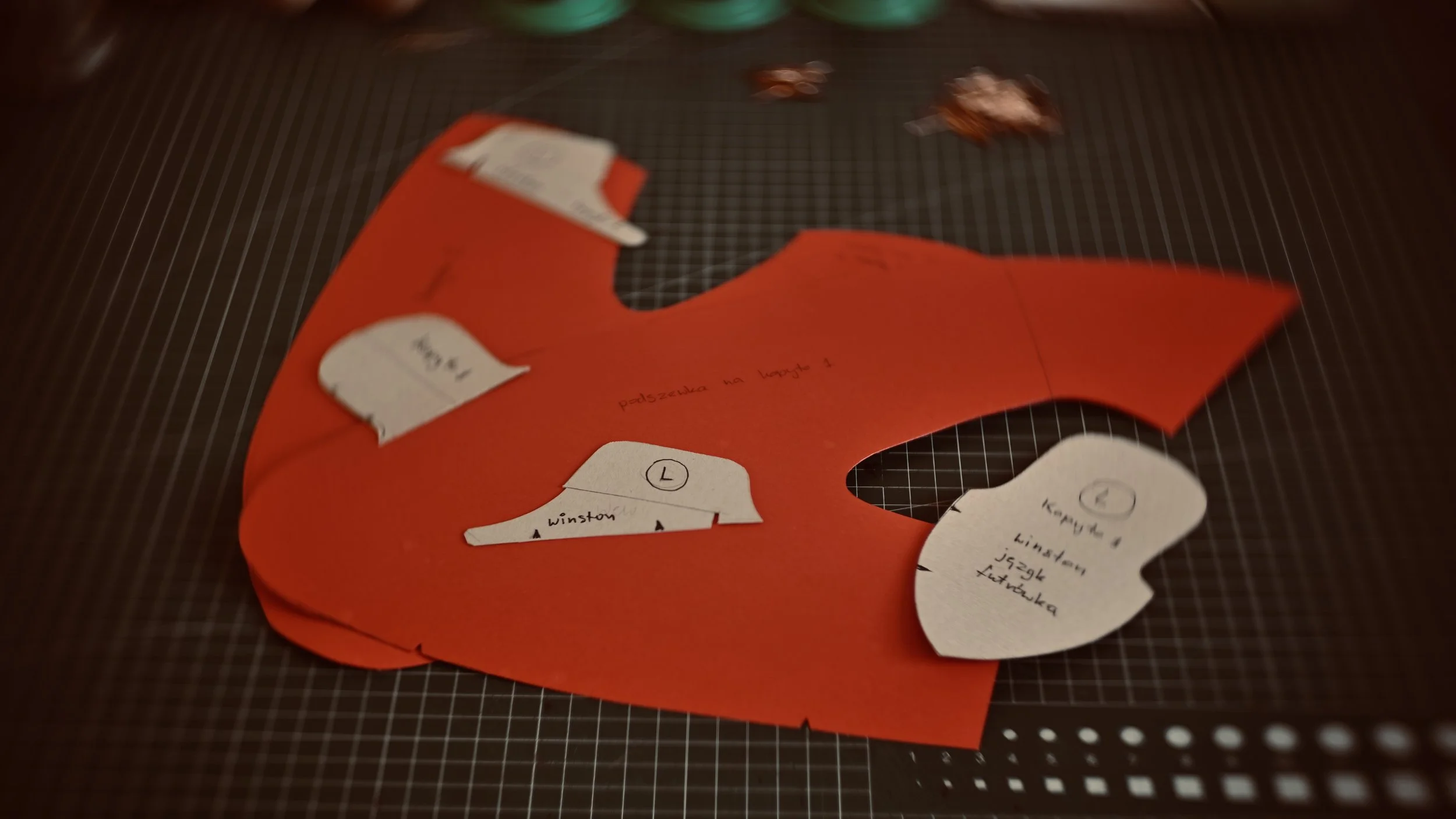
That's all I need to successfully complete this project. I'm thrilled with this level of simplicity on paper. In reality, creating a pair with so few patterns on hand is not so simple.
My approach to the shoemaking profession is a result of these general environmental conditions. I envy those who grew up surrounded by people engaged in a specific profession, which over time became a naturally acquired knowledge and work ethic. Intergenerational tradition fueled an ethos whose essence our contemporary generations no longer understand. To the best of my knowledge, the shoemakers I admire entered the bespoke shoemaking industry from completely different professions. I will write about this fascinating synergy in a separate article, though.
I quickly realized that I possessed all the necessary prerequisites to do my job well. My amateur tinkering, untethered from family tradition, is characterized by an open mind and a fresh perspective. These are the driving forces that set my professional imagination in motion.
While preparing for this project, I came up with a method I would like to explore in the future, and perhaps it will even become the foundation for forging my unique style in shoemaking.
A fantastic feature of my method is its versatility. I'm essentially unconstrained by style. The initial stages of almost every project are grounded in the same preliminary preparations. The principle is simply beautiful!
I begin by preparing the lining, consisting of a single piece of leather. This is then cut according to the top line of the upper, and also to cover the inner facings. This technique works best with derby-style lacing system, where the center edges of the facing can be slightly separated. However, it can be problematic with oxford-style lacing, especially when I want a very tight fit. This is a problem I'm still working on, and I'm not yet sure of the correct solution. However, I have a workaround: sewing small pieces of extra leather, which remain completely covered by the tongue of the upper.
Speaking of the tongue, this is the only additional piece of lining leather that needs to be sewn in separately in this project. I fold the edges of the tongue lining inward, using a pattern that allows me to precisely reproduce the tongue's shape and dimensions. This is about minimizing the final thickness of the tongue, which influences the aesthetics and the fit of the finished upper to the last. This also has a direct impact on the amount of lining material left to cover the facings later on. This element is extended further forward and precisely follows the line of the upper's decorative stitching.
This shape of tongue's lining allows for two things: free hemming of the inner side of the facing and adding a third dimension to that decorative stitching line by slightly raising it.
You have to think twice before cutting the lining leather. It's easy to make a mistake here. However, the method itself is beautifully simple. Over time, all the cutting lines will become completely intuitive. I have the privilege of being able to see the upper lining before it's installed, and I'm delighted with the functional simplicity of this solution. It's the very definition of a clean look.
When designing uppers, I pay special attention to the finishing of the edges. I test each solution one by one, seeking the most aesthetically and functionally satisfying techniques. In this particular case, I decided to duplicate my solution described with the tongue lining. The circumstances aren't ideal, as by choosing a single piece of leather, I don't have enough excess to finish the lace area.
That's why I used a hybrid solution. The lining edge is folded back on itself. It looks great, and honestly, I've never seen anything like it before. For the upper, I opted for a French seam with piping around the top edge. Two folded edges put toghether – that's what I call an elegant accent!
This roughly summarizes my lining design concept. We can move on to the main point of this post. I'm currently looking for a standardization of upper design so that the lining is as intuitive as the upper. I'm focusing primarily on two styles – derby and oxford.
In the “Part Two” of my tutorial, you can see one of my prototypes, which I experimentally derived from a wholecut upper.
It's that brown one there. This design directly inspired the technical execution of the upper I'm showing you here.
The principle is just as simple as making the lining. I cut a single piece of leather to form a section of the upper. I then add a heel counter and facings. It is these cutting lines that I want to standardize. This method offers virtually unlimited lines for these two sewn-on elements. So, it's a standard at the same time, but with enough creative freedom not to become a limiting factor.
Why do I want to develop this method? I need it when preparing a pair of shoes for fitting. Due to the increasing number of orders, I'm looking for a way to streamline this stage of the project. Since the purpose of the fitting pair is to check the fit of my bespoke last, oxford or derby pairs are the best choices. This standardization allows me to effectively speed up the entire process. This way, I only begin actual designing session when I'm certain the final shoes will fit perfectly.